anti-ai writing
This is one of my favourite skills, and something I use daily because I want help with my writing while keeping the way I actually explain things. The idea is pretty simple: keep the argument, examples, and tone, and work on the parts that feel repetitive, inflated, or unnecessarily complicated.
what the research found
One of the papers behind this is The Shrinking Landscape of Linguistic Diversity in the Age of Large Language Models, which looked at over 880,000 texts across seven datasets. The researchers found that when models polished and rewrote people's writing, the writing styles became more similar, with significant reductions of 21–50% in writing-complexity variance across the tested datasets and models.
That matters because a piece can become smoother while losing some of the choices that made it feel like its writer. The research also looked at changes over time, although those observational results cannot establish that AI caused the changes, and the findings don't tell us what every model or editing setup will do.
The Shrinking Landscape of Linguistic Diversity in the Age of Large Language Models
Read the full paper ↗ · First page of the authors' manuscript.
the shape of the writing
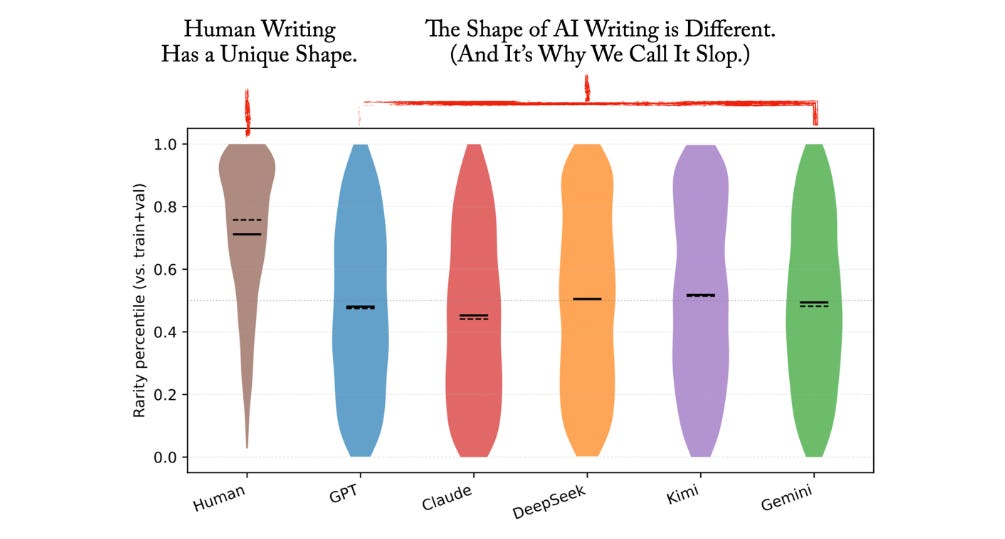
I want the skill to preserve the choices that belong to the writer, including how they connect ideas and which details they decide to keep. Making everything shorter or swapping in unusual words wouldn't necessarily help with that.
other papers that shaped it
Padmakumar and He studied 38 writers and found that InstructGPT suggestions reduced diversity across their essays, while base GPT-3 did not show the same effect. That distinction matters because the model and the way you use it can change the outcome.
Agarwal, Naaman, and Vashistha found that AI suggestions moved Indian participants' English writing toward the US comparison group, including changes in cultural references. And Doshi and Hauser found that AI ideas could improve ratings of individual stories while making the stories more similar to each other. Better ratings and more distinctive writing aren't always the same thing.
how i built that into the skill
I used these findings as a starting point for an editing workflow that looks at the draft and any writing samples before making changes. It keeps the writer's meaning and examples, cuts padding where it adds nothing, and checks that a cleaner sentence hasn't quietly become a stronger claim than the evidence supports.
I also added my own preferences: longer, connected sentences when the ideas belong together, familiar language that an undergraduate reader can follow, and enough room to explain nuance. Words like “because” and “while” should help the reader follow the reasoning, and “moreover” can work when there's something useful to add, but none of them needs to appear on a schedule.
The skill still follows the person using it, so a request for a short answer or a different tone takes priority. These are editorial choices informed by the research; the papers haven't tested this skill or shown that it can reverse the effects they measured.
Full research notes, including study limits and the other sources ↗